Jantje Schiphorst - CFO, Agrifac
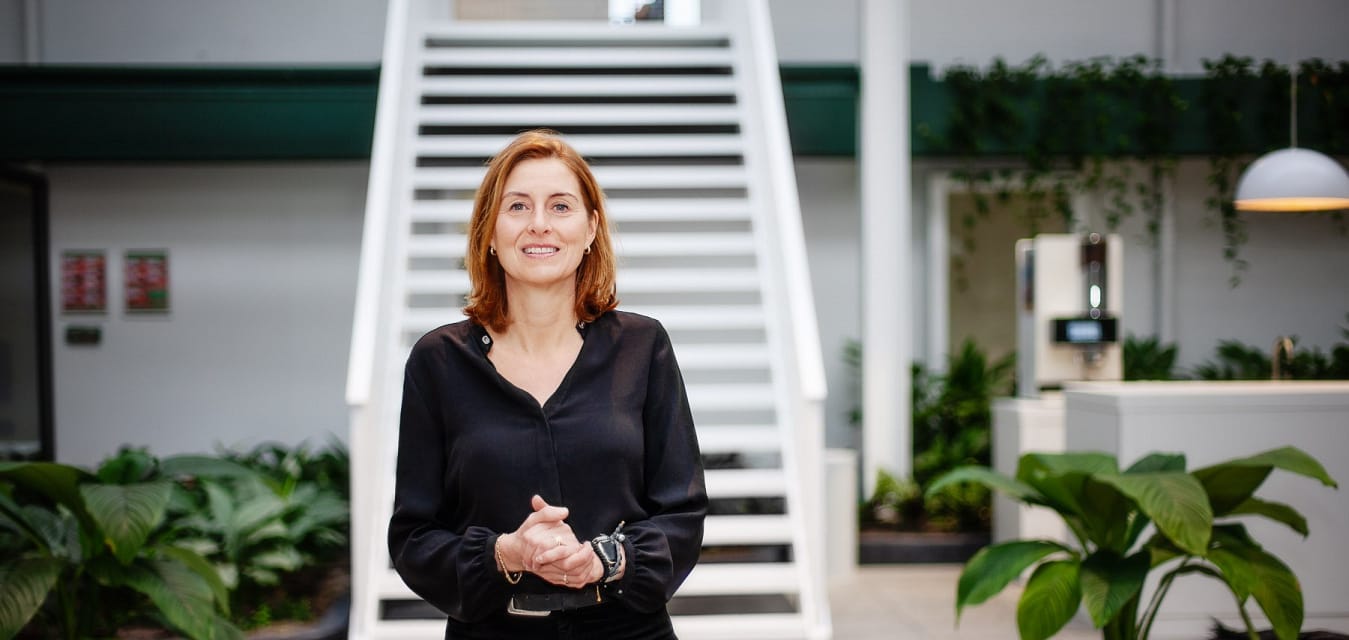
She is a woman, financial expert, and part of the leadership team of an agritech international company. Perhaps not an obvious combination, but it is where Jantje Schiphorst makes a significant contribution to Agrifac's financial strategy.
Jantje Schiphorst - CFO
The recently constructed inner garden is not only an inspiring place for meetings and hosting groups, but also where the latest generation of self-propelled field sprayers can drive in to be admired. You can only find this in one place on earth: at Agrifac in Steenwijk. CFO Jantje Schiphorst is audibly proud of it.
That must be impressive. Is this why you returned to the agrifood sector?
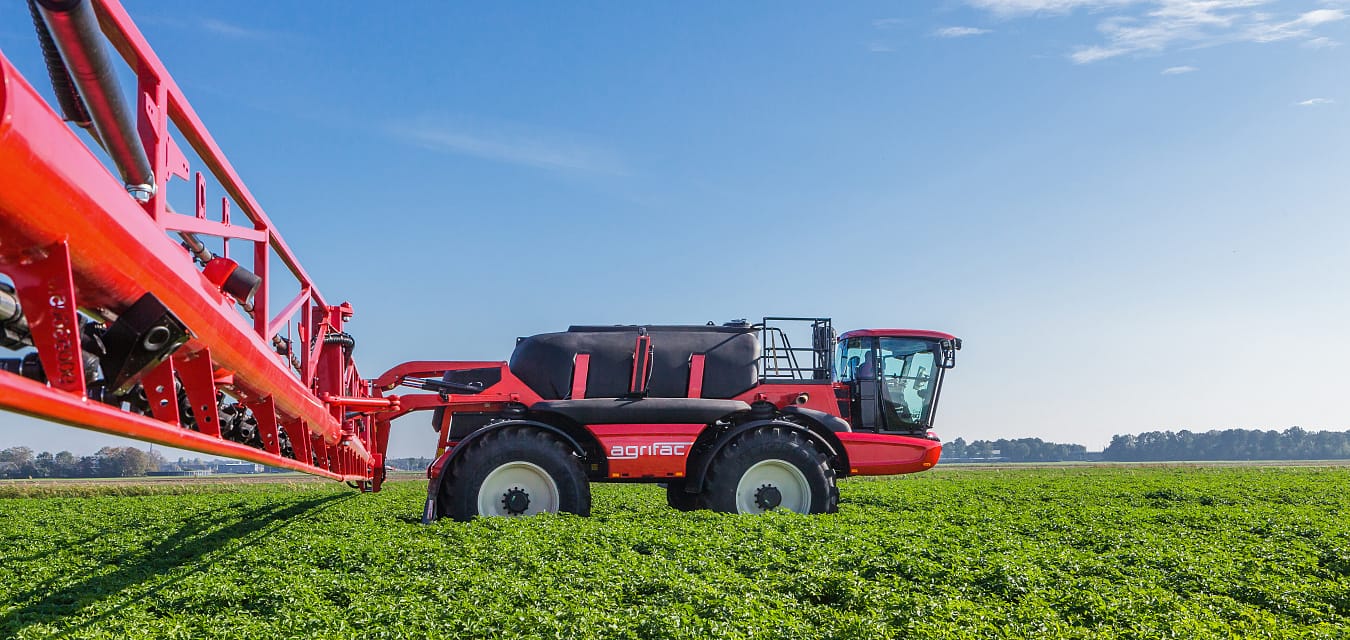
"After a stint at the publishing company NDC Mediagroep and a few interim assignments, I wanted to contribute again to the global transition in the agrifood sector. Preferably at an international company with an innovative product that contributes to sustainable food security. The state-of-the-art spray machines from Agrifac achieve this through precise use of crop protection products, resulting in significantly fewer harmful substances entering the environment, along with better hectare yields. Very inspiring."
The agritech sector is mostly dominated by men. Do you personally connect with it as well?
"Absolutely. I was already familiar with the machines because I lease land to arable farmers. And I come from the region. I was born just 6 kilometers away on a dairy farm."
Since September 2022, you have been the CFO. What have you accomplished so far?
"I have built a financial team and started streamlining administrative processes. Establishing structure takes time because you need to inform colleagues well and explain the bottlenecks. This way, everyone can understand how they can contribute and support. That's how you make the organization work for you. I've been told that I have a lot of meetings and discussions. And that's true because I believe in keeping team members well-informed so they know what's happening within the organization. This way, they can take on their roles and responsibilities. Only then can the organization grow."
What are your ambitions for the financial department?
"I aim to create a positive and constructive financial organization where we not only actively participate but also proactively contribute to business development. My goal is to have the business controllers collaborate integrally with various parts of the organization. Finance should translate the company's strategy into financial and information processes. I want to further professionalize the development and adjustment of forecasts and projections. Especially now that we are expanding in the United States, these tools need to function well."
And for yourself?
"It is an exciting journey for me to guide a company from the startup or adolescent phase to a mature organization. I enjoy witnessing the scaling up process up close. With my process experience, I contribute to developing a tactical operational management team into a top management team with a more strategic role. Additionally, I ensure that my own successor is being trained."
Which financial aspects do you consider crucial in this industry?
“Compared to the food sector, where I have mainly worked, our machines are capital goods with warranty policies and financial options such as leasing, buyback, etc. In machine construction, there is what we call an installed base; sold machines still need to be maintained and serviced, so parts management and inventory control must be in order. In short, the financial dynamics in agritech are completely different.”
Your LinkedIn profile states; ‘Sees quickly the bigger holistic picture. Dares to challenge.’ What do you mean exactly?
“Penny wise, pound foolish. Often I see financial professionals focusing too much on the small cents, while it is much more important for the organization that the big picture is correct. I see the big picture and the direction the company needs to take. For Agrifac, it is crucial that the business is up-to-speed to stay ahead of the competition. My advice to finance directors? Identify two or three key points to ensure continuity. Determine how to organize that and bring up the pain points. Let the discussion happen.”
In addition to being the CFO, you have also held various other positions.
“That's correct. Currently, I am a Commissioner at Groningen Seaports, where significant developments are taking place in terms of site allocation, hydrogen, sustainability, and energy transition. Additionally, as a board member at the Hanze Hogeschool Foundation, I am involved in a business development program in East Africa, supporting startups and scaleups in the agribusiness sector.”
Isn't that a lot to handle all at once?
“No, not at all. I love working! Reading reports on Sundays is not a punishment for me. While the kids do their homework and watch a movie, I sit at the table with a cup of tea reading. As long as I can be flexible with my time and not feel stressed when doing something enjoyable, I enjoy both work and the beautiful things in life. Instead of three days of hiking, one day is enough for me. It may also have to do with getting older; being able to say that this is it for today. Also, being ill, I had cancer in 2019, has had an impact on that. Everything becomes relative when it could be your last Christmas.”
In what ways has the illness changed you?
“I am more to the point. If something doesn't seem right, I say it. Unlike before, I address issues. In good work relationships, you should be able to say anything, as long as you do it correctly. Along the lines of content and process, but never directed at the person.”
Are you as straightforward as a leader?
“Not really. What I see is that most professionals want to contribute to improving themselves and the company. I enjoy helping them develop by reflecting together on their performance, offering training opportunities, or putting them in a position outside their comfort zone. It's wonderful to see how people, with a little coaching, grow when they are in a place where they are challenged.”
And what if they don't perform well? As a member of the management team, you also evaluate people.
“Throughout my career, I often saw colleagues who were very good at their job, but who didn't always have the seniority and decisiveness to take responsibility themselves. Then I first look at what we as management team are not doing well. What do they need to adopt that attitude? In the assessment, I work with two axes; what is the quality of the output and how much effort does it take me? If it concerns a young employee who still needs to be trained, I am fine with investing a lot of energy, but with a mature professional who is underperforming, it becomes more difficult. Something needs to change. Either you work on it, or you leave. I'm not one for prolonged messing around.”
You come from the corporate world. What lessons have you learned at Agrifac?
“The entrepreneurship. Just go ahead and do it. As a financial professional, you sometimes have a role that can stop things, but at some point, you have to push through to achieve something. In this rapidly changing world, as a company, you need to be quite agile and able to switch quickly. Nowadays, I also go for it with only 50 to 60 percent knowledge. Or as they say here; rubber on the asphalt.”
Are there other things you do differently now?
“Definitely, I have learned from being ill that every action you take today to solve something is a step in the right direction. I want to show that even more.”
Where do you draw your inspiration from?
“What I find inspiring are people who believe in something and really go for it. Especially when they dare to go off the beaten path and are persistent in realizing their dream or idea. I follow people who do that in the field of agriculture and food, in the Netherlands, Europe, and in less developed countries. And I don't mean political leaders or NGO executives, but concepts that come from a business or company and contribute to a better world. That really resonates with me.”
Do you want to take that next step? Then get in touch with us.
Photo: Almar Setz
[Published: February 2024]