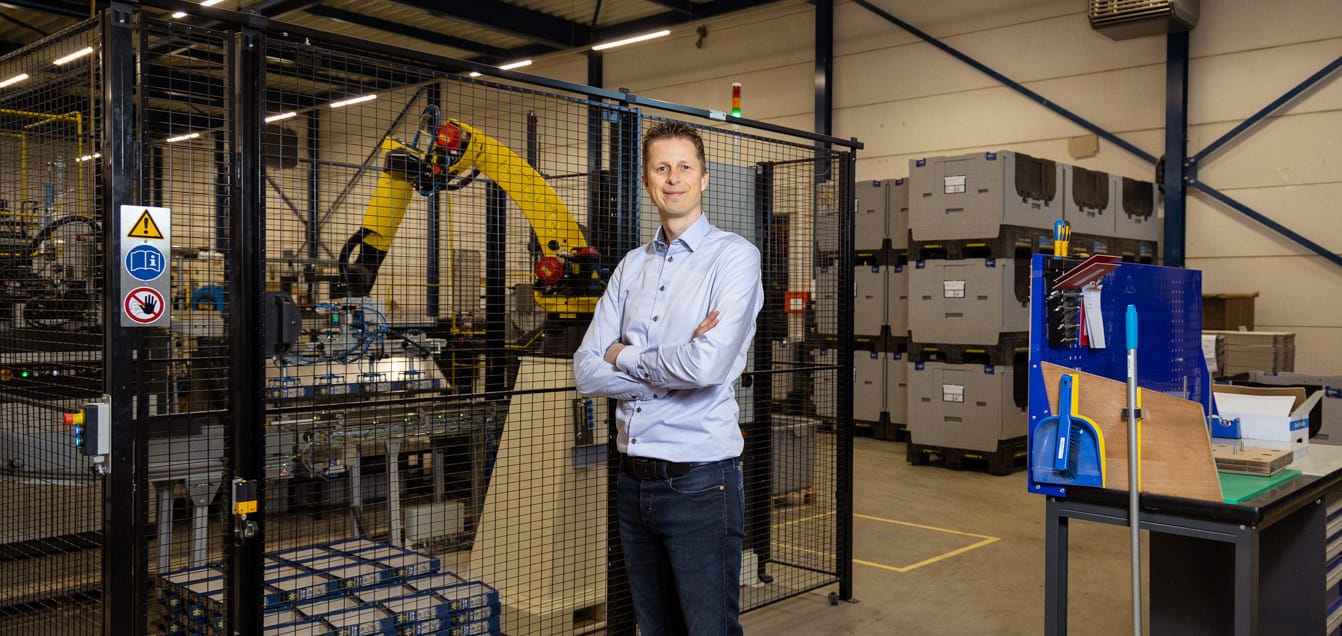
Arjan Bink - Managing Director, NSF Games
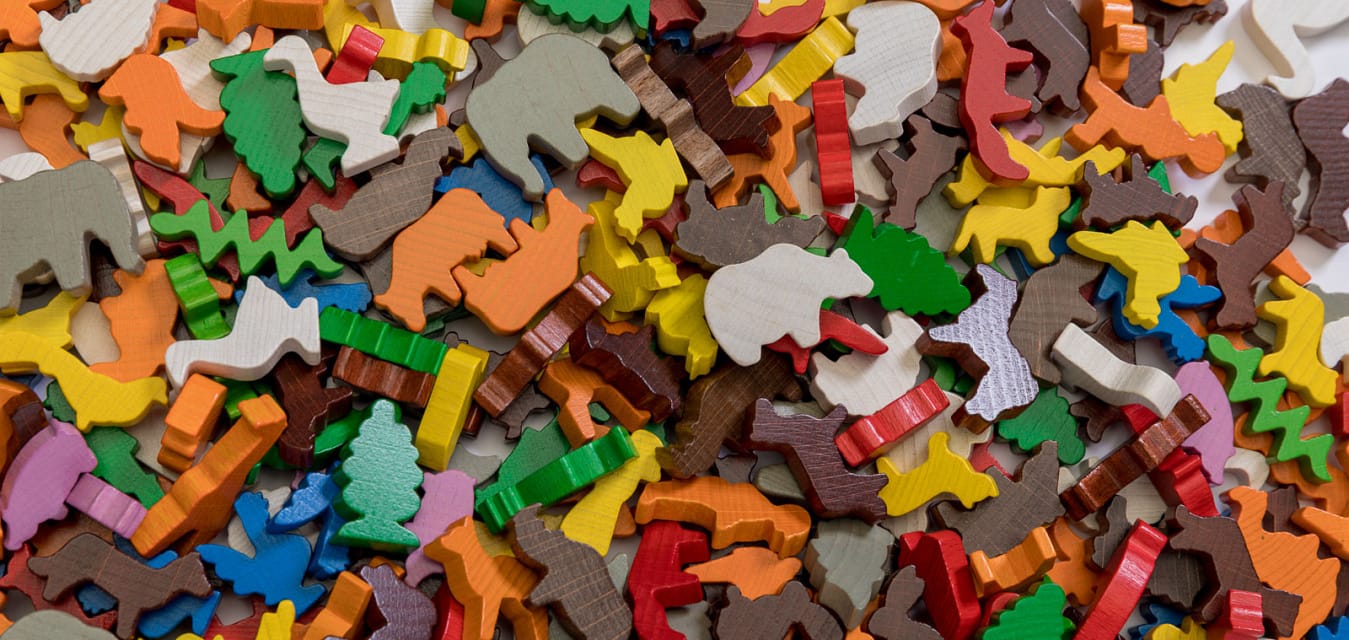
Some are reminded of Charlie and the Chocolate Factory when they see all the games and puzzles, while others delight in the highly automated production lines. The Dutch Games Factory (NSF Games) in Medemblik has been producing games and jigsaw puzzles from renowned brands for over 70 years and still aims to win every game.
Arjan Bink - Managing Director
Everyone, from young to old, plays a game now and then. It's highly likely that the game was made in Medemblik, North Holland. Arjan Bink is the Managing Director of the Dutch Games Factory (NSF Games) that supplies appealing titles like Carcassonne or Stratego worldwide.
What does the market for games and jigsaw puzzles look like?
‘Our market ranges from professional publishers and product developers with years of experience to people who come up with a game in an evening and have a product made through crowdfunding. We fit within that entire spectrum. From individual parties to internationally established companies that invent and publish products with high professionalism. These can be strategic board games in a niche market, with players who delve extensively into the manual and apply complex strategies, to more fun games like Party & CO. The puzzle market consists of adult and children's puzzles.’
What position do you hold in that market?
‘NSF can be considered among the top game and puzzle producers worldwide. Our largest markets are the Benelux, Germany, France, England, and Scandinavia, but we also supply to countries further away such as Spain, Italy, the United States, and occasionally an exotic destination.’
Board games have been around for ages, what does the future hold?
‘During the pandemic, the games and puzzle market grew rapidly and towards the future, we continue to optimize and improve our output. This is necessary to compete with the Far East. Automation and process optimization are the key factors to reduce costs. That's why we have invested heavily in automation, robotics, and process optimization in recent years. Production has been fully automated for a year now. We have 12 robots in our warehouse, 3 completely new production lines, and we use unmanned forklifts. Take puzzles; they are laminated on cardboard, automatically die-cut, go to the production line, a machine makes the boxes, a robotic system processes the puzzles and puts them in boxes, after which a robotic palletizer packs the boxes on pallets. No one is involved in this assembly process anymore.’
NSF is a one-stop-shop for publishers. Do you also develop games yourselves?
‘No, but we do develop technical solutions for our customers. For example, if a customer wants a 3D castle as a game board, we propose how we can technically make that castle. Another example is the Anne Frank house that we made for educational purposes. A house with floors to tell the story in class. The lead time for an order is six to eight weeks. During that time, game components such as pawns and dice need to be developed, the plastic inlay made, proof sent to the customer, and the product manufactured and delivered. All in all, an intensive process of approvals and quality checks. To manage this effectively, we have developed our own system and structured the company accordingly.’
What are your plans for the future?
‘In addition to upgrading the factory, we have invested in processes and a culture of continuous improvement using the PDCA cycle and a quality management system. The structure is in place, but it still needs to be further implemented and automated. By fully automating the processing of production data and data, we can better monitor the factory's performance and thus steer towards greater efficiency. Quality is another focus. Since last year, we have been ISO certified, but it's not something we can do on the side as we grow.’
So many challenges. What about sustainability ambitions?
‘We see an increasing demand for sustainable products. We have already invested in this and will continue to do so in the future. For example, puzzles will no longer be packaged in plastic bags but in paper. Additionally, we have a strong preference for local sourcing. We have also taken steps towards sustainable production, such as implementing LED lighting in offices and factory halls, and using energy-efficient compressors. Furthermore, there are some energy-saving projects on the to-do list that we will be working on.’
What was the biggest challenge in recent years?
‘The biggest challenge was the rapid technological and organizational developments we have implemented in recent years. How do you properly implement automation, improvement processes, and procedures, and how do we get all employees on board with these changes? It's a cultural change.’
Are these types of changes the most difficult in a company?
‘Not necessarily. If we explain well why it's necessary, back it up with facts, people are willing to think/change and they become enthusiastic. It's a process that is never finished. We notice that sometimes adjustments are still based too much on assumptions, which is why we are now transitioning to working with a quality management system. A good start has been made, but further implementation and professionalization are needed. A great challenge for the new Quality Manager.’
What kind of people work at NSF?
‘We are a modern West-Frisian company; informal, no-nonsense, and transparent. A low-threshold flat organization where doors are open and employees are straight to the point, analytically strong, and focused on innovation. The central focus is: With what solutions can we make the organization smarter and better? The drive to take that step, that's what we are looking for in our employees.’
Which quality do you find most important?
‘People who come up with plans, improvements, and ideas from their drive and intrinsic motivation - self-starters. Take the lead, speak your mind, and communicate openly and honestly, that's how we work here. Goals are set, but the path to them allows for freedom in interpretation. This means you have opportunities to improve and optimize. You should be attracted to that entrepreneurial atmosphere.’
Is everyone crazy about games?
‘We see that many colleagues find it enjoyable to be part of creating the product we make here together. It's a bit like the feeling of Charlie and the Chocolate Factory. We produce a ready-made product that offers people relaxation. When I walk through the factory and see that the processes are correct, the robots and machines are running smoothly, our employees are focused and attentive to their work, and the games and puzzles are rolling off the production lines in high quality, then I feel truly proud.
Photographer: Dana Schoenmaker