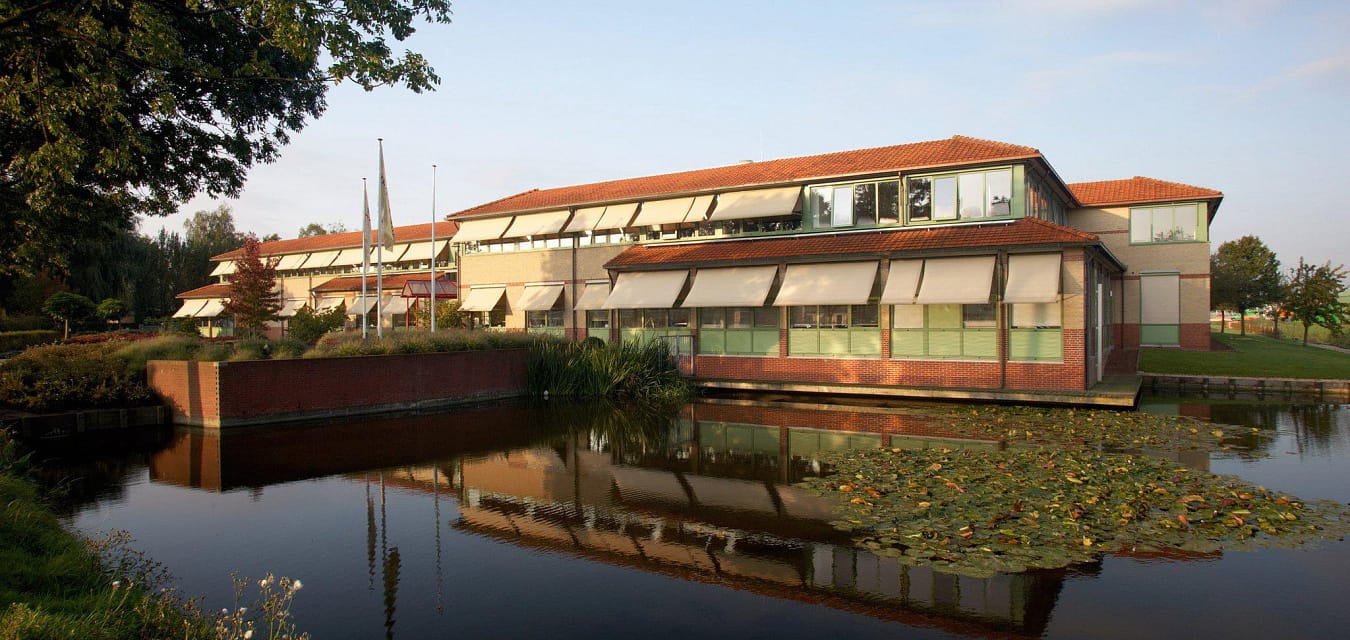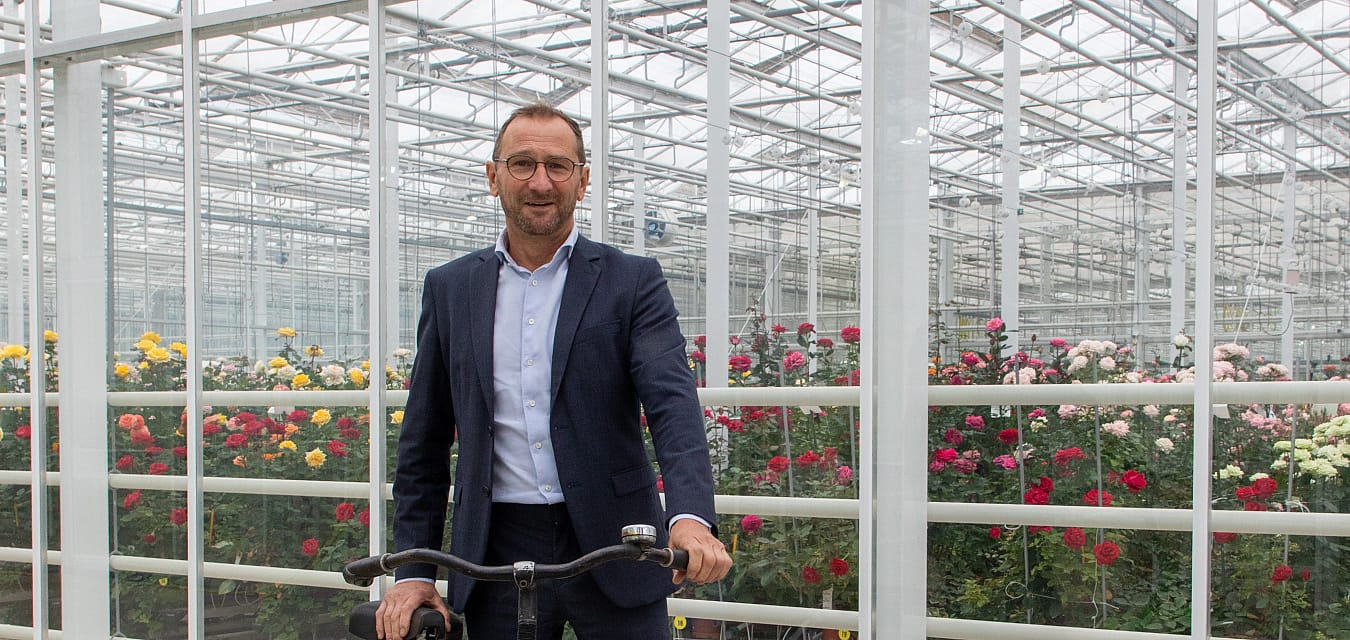
Driving onto the grounds of Naktuinbouw, you immediately know and feel: this is no small player. The centrally located parking lot is surrounded by sturdy buildings. No high-tech glass, but solid bricks. You won't see people in sharp suits and designer shoes, but individuals with their feet in the clay, in the laboratory, or elsewhere in the vast horticultural world. "We are a family company with strong cohesion. Many people who work here are sons or daughters of growers or breeders." That's what Jan Meiling, Director of Strategy & Development, says. He, together with Stef Schuijt (HR & Operations), forms the two-headed management of the quality service located in Roelofarendsveen. As an Independent Administrative Body (ZBO), its main statutory task is to monitor and certify the quality and health of planting material in the horticultural sector. Without Naktuinbouw's stamp of approval, no seed, cutting, or plant crosses the border. "Legally, we stand for the public interest and we have statutory duties. We also provide services as an extension of that. For example, in the form of (online) training and workshops. Through this role, we feel very connected to our customers, the companies registered with us who are often active globally. If you wake someone up in the middle of the night, they will say: we ensure high-quality planting material. So that everyone has good food in the world, there is a beautiful bouquet of flowers on the table. Or a beautiful tree-lined avenue to cycle through. We contribute to the quality of life for the world. As a biologist, it is a pleasure for me to be part of the knowledge and passion that drives the people working here."
That sounds fantastic, but you've been working on changes for a while now, based on the vision and strategy document 'Next Level'. What are the key changes?
"Innovation is urgently needed in terms of technology and digitalization. We have 3800 registered companies with us. From large multinationals with millions in turnover to small family businesses. We see significant technological advancements among our medium and large clients. Nowadays, multinationals employ artificial intelligence, sensor technology, and camera systems. Some have a laboratory much larger than ours, which they use for research and quality control. They have 20 PCR robots; it's unbelievable. It's like a lunar station. There is no sector as knowledge-intensive as the breeding sector. Medium and large companies are also fully engaged in digital transformation. Entirely new departments have been established with roles like enterprise architect, data architect, data steward, data owner. All structured to manage, protect, connect, and share data. We need to keep up with this technological and digital transformation. If we don't, we'll lose connections with the companies registered with us. While we currently conduct seed analyses with highly experienced individuals who can distinguish all seeds under a microscope, we also aim to move towards technologies that use image recognition and AI to differentiate those seeds. This will greatly help us make our work more efficient."
It sounds a bit like Naktuinbouw has been asleep at the wheel. How do you see that?
"We haven't been asleep, but we're not at full speed yet. We are really accelerating. Firstly, it's related to the critical mass needed to finance the digital and technological transformation. A second reason is that we operate on a cost-recovery basis. We don't make a profit, so we don't build up reserves. Large investments require borrowing. Another factor is that we have to maintain an extremely broad portfolio of assessments to meet all import requirements of 'third countries' (countries outside the European Union). Including regulations that may only be requested four times a year. A commercial laboratory would never include all these protocols in its portfolio. But we are legally obligated to develop and maintain these 'exotic' protocols and assessments. So, it's challenging to navigate the wind to fund such complex, long-term, and costly developments. We need to justify this towards our board and our stakeholders. They may need to say: perhaps an 8% tariff increase this year instead of 5%."
When a commercial company wants to maintain its critical mass, it always comes down to autonomous growth, acquisitions, or collaborations. What strategy do you have?
"Acquisitions are 'out of the question,' that's not an option. Collaboration, however, is." Meiling points to a circular image on his whiteboard. At its core are the six quality and inspection organizations present in the Netherlands falling under the Ministry of LVVN: Naktuinbouw, BKD (Foundation for Inspection of Flower Bulbs), NAK (for agriculture), KCB (Quality Control Bureau that independently inspects fresh vegetables and fruits, cut flowers, and plants), SKAL (organic farming control and certification), and COKZ (Control Authority for Dairy, Eggs, and Egg Products). "At the beginning of this year, we, as six inspection organizations, started a program. Not leaving our collaboration to chance anymore, but actively fostering it."
What else do you do besides collaboration?
"We have developed a system beyond legal requirements: NAL. This stands for Naktuinbouw Authorized Laboratories. We have managed to allow seed companies with their own laboratories to test their seeds for quality and health. We only oversee how they do it. This year, the NVWA (Netherlands Food and Consumer Product Safety Authority) has approved this. By doing so, they are saying: this is so good, we can fully stand by this internationally. Isn't that great! This results in fewer samples for us to analyze, but we still believe it's the right thing to do. Because this is what the industry wants. It promotes speed, logistics, effectiveness, and efficiency. Seed companies are very aware of the dynamics and interaction between Naktuinbouw and their business. It is also in their interest to maintain critical mass at Naktuinbouw. We support each other, sustain each other, learn from each other, and depend on each other. It's truly a very constructive collaboration. That 'common ground,' that feeling we share is great for keeping the whole machine running. This has provided a huge competitive advantage for the Dutch economy."
The laboratory is the beating heart of Naktuinbouw. What technological and digital transformation do you have in mind?
"The need for technological and digital advancement is above average for our laboratory. There are 131 nice, passionate, and skilled people working there. They find it very exciting to work in the world of plants. They assess seeds and plants for quality, identity, and health. Quality, for example, refers to: are those seed bags pure or do they contain weeds? Health means: is there a fungus, bacteria, or virus infection present? Identity, for example, is: are we dealing with the correct seeds as specified? Additionally, they face significant seasonal peaks and valleys in sample submissions. We also deal with very specialized work, such as fungus testing. It takes time to train someone new when someone leaves. For these seasonal aspects, automation can help. It's much easier to scale up when you have automated processes. And hopefully, it will also become more cost-effective. Furthermore, our customers want to not only digitally register their samples but also see in real-time and online how far along we are with their samples and what the results are. That's what we're working on."
Name a concrete example that you would say: if we have achieved that in two years, then I am super happy!
“Our dream is a modern and fully digital interface with our customers. A customer logs into a platform and can then read all his orders, progress, and reports.”
Looking back at the 1.5 years you have been working at Naktuinbouw, are you enjoying yourself?
“Yes! We are a well-oiled machine and it is a pleasure to be part of it!”
Publication: September 2025
Photography: Henk Snaterse