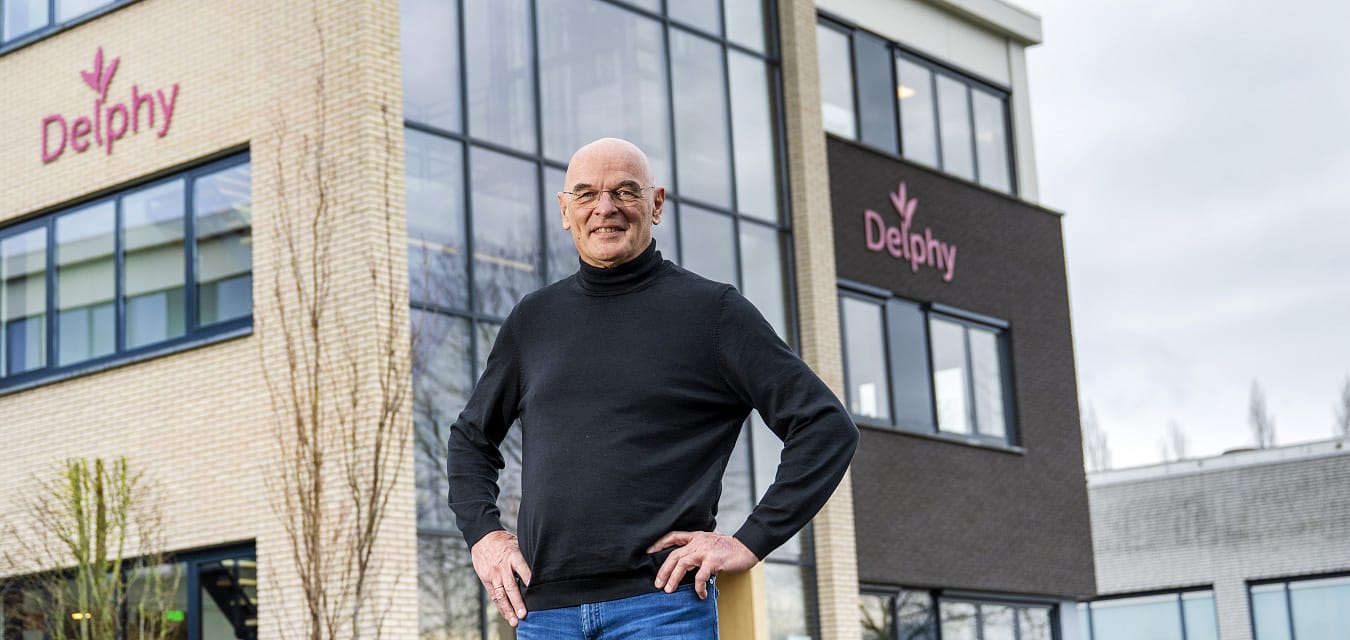
Klaas van Egmond - Cultivation Engineer, Delphy B.V.
Sensors, robotics, algorithms, and artificial intelligence. If there is one agricultural sector that has embraced innovation, it is certainly horticulture. Delphy Digital is a leader in this green digitalization.
Klaas van Egmond - Cultivation Engineer
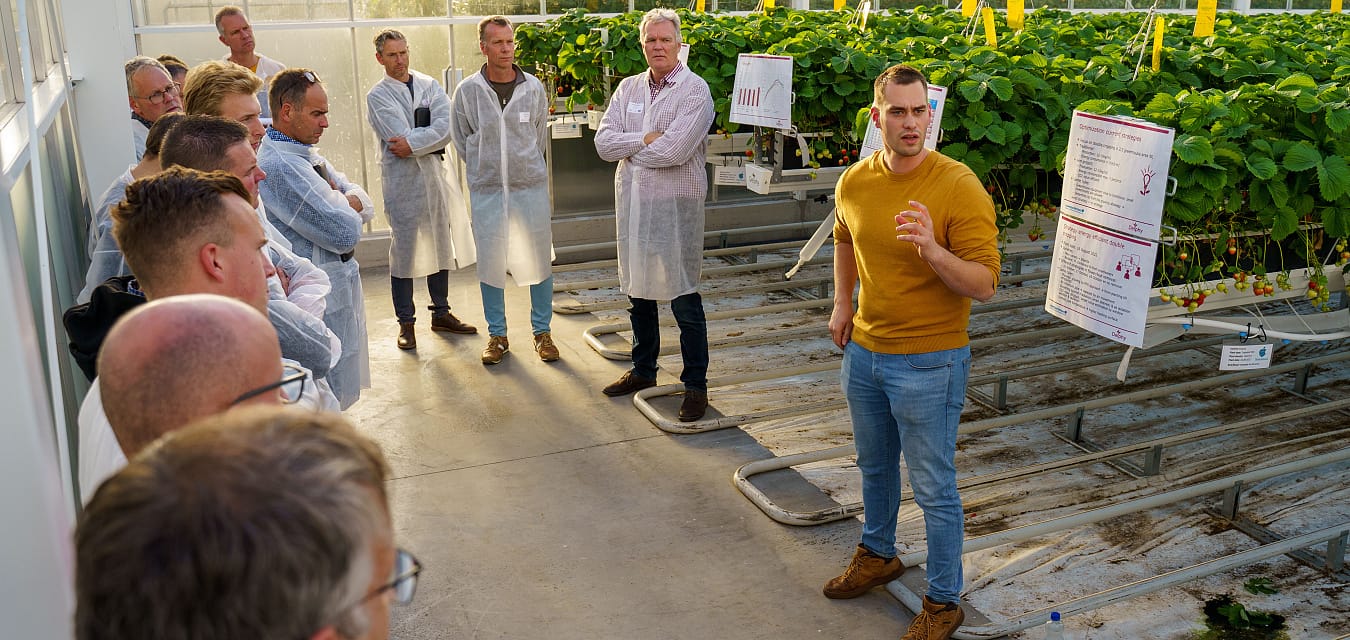
A group of foreign guests is being guided through the complex of Delphy in Bleiswijk. Employees are coming in and out. A greenhouse is being thoroughly prepared for the cultivation of a different crop. In short; a lot of activity. This is not only visible, but also virtually. Cultivation Engineer Klaas van Egmond focuses on ornamental horticulture and the development of the team with cultivation and decision-making models. The central question? How can data-driven cultivation management contribute to an optimal cultivation process?
Delphy is a well-known name among growers and entrepreneurs. What position does Delphy Digital hold within that?
"You can see Delphy Digital as a separate department with its own business in all crops to the Dutch and international market. We are growing rapidly, especially in greenhouse horticulture. If we look at implementations, we have almost doubled in the past year. And we aim to continue this growth. The goal is to remain a leader in green digitalization."
What strategy do you hope to use to seize the opportunities and ambitions?
"Internationally, we see many opportunities for the further implementation of our high-quality technology. The focus is on scaling up and expanding. Delphy already has teams in Poland, Great Britain, Belgium, Scandinavia, Kazakhstan, Japan, and five African countries. Recently Germany joined, and we have the ambition to start in the United States. We receive many requests from North America regarding tomato and strawberry cultivation under glass. So, there are also significant international opportunities for Delphy Digital."
In which segment is Delphy Digital most successful?
"Tomatoes and chrysanthemums are markets where we are most successful. For example, a cultivation planning model is now used in almost 100 locations in tomato cultivation. These companies use the tool to calculate everything before starting a cultivation. An optimal plan specific to their company and situation is created. It shows the choices that growers can make to achieve the best results in terms of production and quality. The beauty of it is that the grower knows in advance what the costs are with a certain cultivation setup and what yield and financial result they can achieve."
Does this also influence the financial health of a company?
"That's correct. Take the energy crisis, for example. This winter, many growers used our model to calculate whether additional lighting was worth the cost. Through digitalization, you know precisely whether lighting is profitable down to the last detail. So, you have quite an impact. Without a tool, growers would still make the calculation themselves, but that would be more based on gut feeling and experience. With our model, the outcome is truly supported by data, concrete numbers, and a timeline. You know better what to expect. That makes it valuable."
Do you also visit growers a lot as a Cultivation Engineer?
“Absolutely, very often! I can be found in the greenhouse discussing with growers how the management software works and what they need. The goal is to further develop digitalization together because ultimately the grower is the one using it. It's a fun part of my job!”
There are more players involved in digitalization. What makes Delphy unique?
“We have our own approach and, in addition, our enormous knowledge of plant physiology and cultivation. Our models and algorithms help growers make certain choices faster and better. Smart solutions that meticulously calculate cultivation strategies for the customer. How will the plant actually grow? What will the expected production be? How is water and energy consumption? Diseases and pests are more manageable or even preventable. How efficient is a particular cultivation, and what can I work on to improve it? It's no wonder that more and more companies see the opportunities that digitalization offers.”
Great prospects for the future then!
“Absolutely! More data is the next game-changer. Within ten years, due to the automation of all measurements in the crop and crop growth, even more will be possible. That's why we are actively working with startups and suppliers on systems and tools to collect that data. It's great to be there first and to be able to contribute.”
What skills does a Cultivation Engineer really need to be successful?
“Two things; one is an affinity for digitalization and cultivation. You must enjoy that intersection. Secondly, you like to engage in conversations with growers and other stakeholders. You see opportunities and have the ability to further develop and implement something to ensure that the grower ultimately benefits from it. Furthermore, working with tech and cultivation energizes you.”
How is the team structured?
“Within Digital, we work in a mixed team of ten colleagues, including data scientists, cultivation engineers, and software developers. Mostly young people with different backgrounds. The day starts with a stand-up meeting. Also a moment to socialize and share challenges with each other. The office in Bleiswijk is our base. Additionally, we work hybrid a lot; at the customer's location and from home. And we regularly have outings.”
What do you like about the way of working?
“There is a lot of freedom to do what you think is right to do. If you have a good idea and a plan, we will work on it. It is also expected that you take initiative and take responsibility to make progress. And you don't have to do that alone, that's what I have really experienced in the past six years. Delphy guides its employees well, and there are many opportunities for personal development. All new employees follow the Delphy Academy, regardless of experience, and everyone gets a personal coach.”
Does the social contribution mean something to you?
“I am aware of our contribution to food and flower production. With fewer square meters and input, becoming even more efficient, sustainable, economically viable, and internationally more competitive. If you have that feeling of; wow, what great developments! And I can't wait to see what else is coming, then you should be at Delphy, because we are building something beautiful!”
Photo: Jasper Hof
[Published: June 2023]