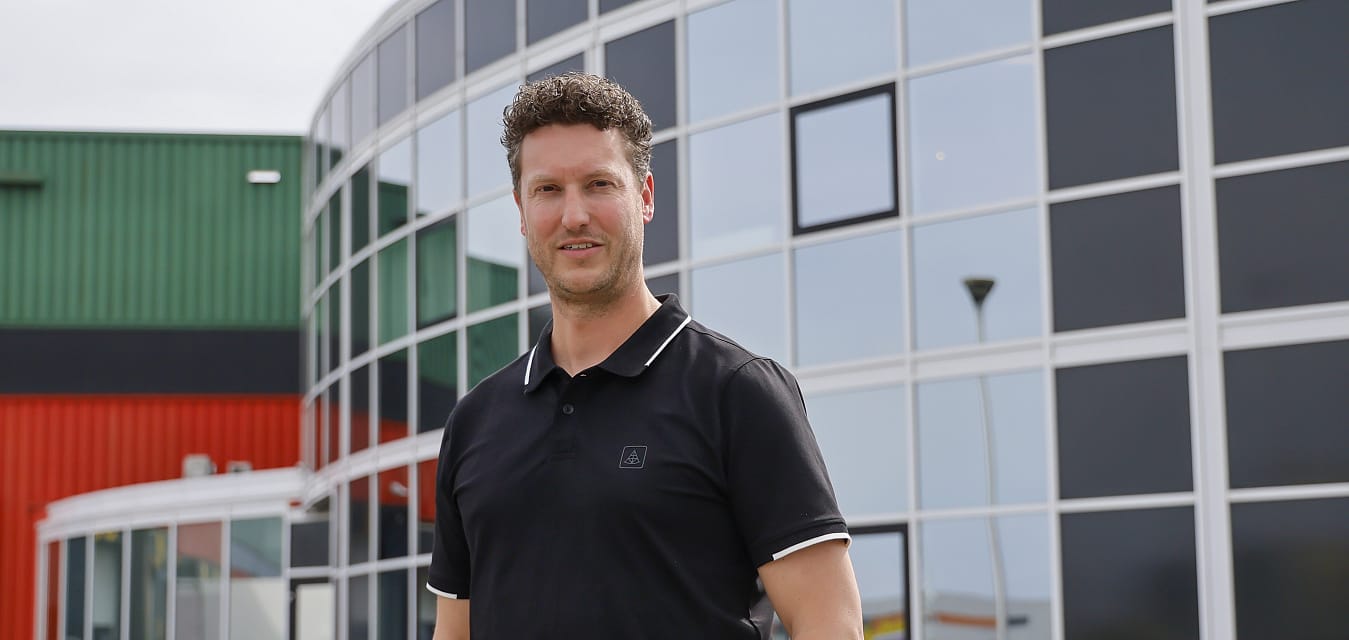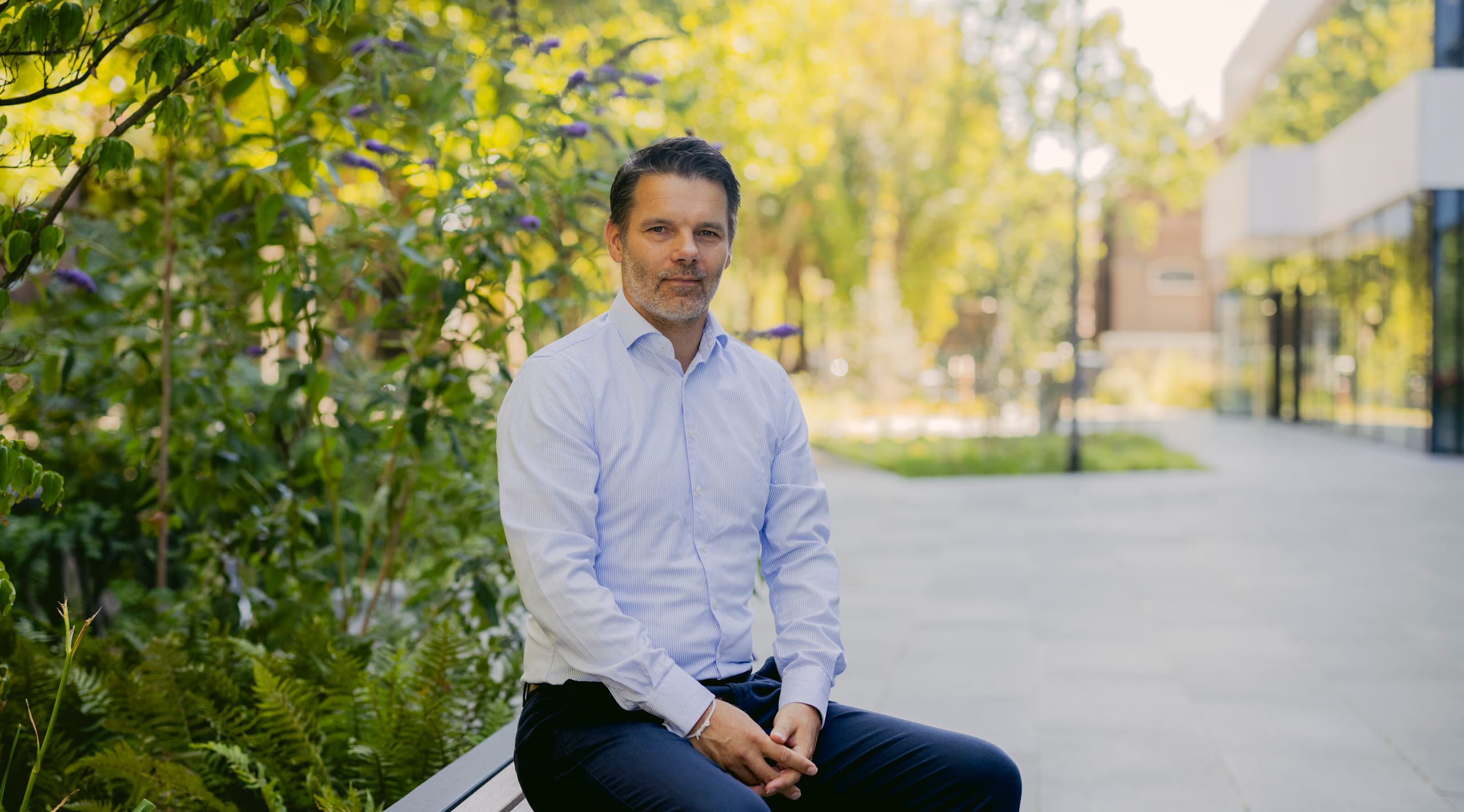
Geeuwke Bosma on interim leadership in the food and agri chain
“Strategy is only valuable when you manage to translate it into action, results, and movement within the team.”
As Interim Procurement Director Agriculture NL at McCain Foods, Geeuwke Bosma works in the middle of the agricultural chain. An environment where strategy, grower relationships, market developments, and supply security are directly interconnected. Through Nomilk2day, he temporarily stepped into a position that requires not only experience but also overview, leadership, and the ability to provide direction quickly.
With 20 years of experience in procurement, and 15 years in food & agribusiness, Geeuwke feels at home in complex production environments. He previously worked for twelve years at FrieslandCampina, where he held various roles from buyer to procurement director. He now consciously chooses interim positions. “I find it rewarding to make a focused impact in a new environment.”
Can you briefly introduce yourself and describe what you are currently doing at McCain?
“I am Geeuwke Bosma, living in Zwolle, married, and father of three daughters. I have 20 years of experience in procurement, especially in production environments and within the food industry. At McCain, I currently work as Interim Procurement Director Agriculture NL. Within my team, we are responsible for managing relationships and contracting potato acreage from growers in the Netherlands and Germany.”
Procurement is a crucial business activity, but in agriculture, I believe it goes much further than that. How do you explain your role to someone outside the sector?
“At McCain, this role falls within the Agriculture department and not within the Procurement department. This is all about how we collaborate with growers, who are a crucial link in the chain. McCain's performance is strongly tied to the quality of this collaboration and is therefore strategically important for the company.
It's not just about price or contracts, but trust and relationships. We work closely with growers on aspects of quality, availability, and sustainability. Especially in the agricultural sector, collaboration and foresight are essential. The weather is becoming more unpredictable, markets are more volatile, and outcomes are less predictable. As a sector, we need to undergo a transition that goes beyond just looking at the next season.”
What makes this interim assignment at McCain interesting for you?
“It's a great introduction to another industry within the food sector. My passion truly lies in food and agribusiness. When you look at major sectors in the Netherlands, dairy and arable farming are definitely among them. McCain is right in the middle of that world. It aligns very well with my experience and interests.
Additionally, McCain is an international organization, but with a direct connection to the primary sector. I find this combination interesting: you work strategically, but at the same time, you are closely involved in the practices of growers, raw materials, and production.”
You enter an organization temporarily. How do you try to quickly add value?
“For me, it starts with truly understanding what matters. This involves processes and market developments, but most importantly, the people you work with. What motivates them? Where do they come from? How do they view the organization and the changes taking place?
As an interim professional, you cannot come in and immediately say, "this needs to change." You have to meet people where they are. Not just physically, but also mentally and in their context. From there, you can take steps together.”
What does that require from you as a leader?
“Especially that you can lead situationally. There is no one size fits all. You work with different people, different stakeholders, and different levels of experience. One person needs clear boundaries, while another needs space or an explanation of why something is changing.
In the sector, we also see a movement towards more fact-based work. Where in the past much could be based on experience and intuition, now there is an increasing demand for substantiation, data, and structure. For some people, this is a small step, for others, a bigger one. You need to have an eye for that.”
Which developments in the sector are most relevant for you in this assignment?
“There are many challenges facing the agricultural sector. Volatility and uncertainty in supply and demand, as well as weather conditions, make it important to look ahead with growers towards a sustainable future chain.
Potatoes are a natural product. Weather conditions during the growing season affect quality, availability, and storage. You can't control the weather, so the question is mainly how to make the chain more resilient.
You also look at technological developments, choice of varieties, water availability, and the resilience of the chain. These are long-term processes. Sometimes you are talking about choices that will only have a real impact at scale over several years.”
When do you think interim is a good solution for an organization?
“Interim can be valuable when an organization needs temporary reinforcement, additional experience, or a fresh perspective. Especially at a strategic moment, an external person can help bring clarity.
For example, I have learned a lot in dairy and other commodities markets. It's not the same as potatoes, but the dynamics sometimes seem more similar than you think. Processes, market pressures, stakeholder management, and supply chain issues are common across many sectors. As an interim, you can help bring those external insights inside.”
What do you hope to leave behind once your assignment at McCain is completed?
“I hope to leave behind a clear strategy and a concrete plan. Not just a nice document, but a plan with clear actions, structures, and guidance. Something the team can truly move forward with.
A good strategy brings stability. Especially in a dynamic organization, a clear plan helps to stay on course. With a strong plan in place, a team can build on that.”
What do you see as the strength of interim work?
“For me, the strength lies in making a focused difference. In a permanent role, you are often playing on many chessboards at once. As an interim, you can make sharper choices: this falls within the assignment, this is important for the period I am here, and this is where I will focus my energy.
My strength lies not only in creating a strategy but especially in getting from A to B. How do you translate a plan into what we do today, next week, and next year? Ultimately, it's about measurable results.”
How was your experience with the match and contact with Nomilk2day?
“I had been in contact with Nomilk2day for a while. Initially mainly about permanent positions, but later I indicated that I was also open to interim roles. What I find strong is that you have a good network in agri and food. You can tell that you are talking to people who know the sector.”
When this assignment came up, I was apparently top of mind. That's nice. It doesn't feel like just any recruiter forwarding resumes. The approach is personal, open, and transparent. Especially in these types of roles, sector specialization is important. You need to understand what's happening in the market, which people fit, and what an organization needs."
Finally, what characterizes you as an interim professional?
"I get up to speed quite quickly. I dive deep into something and really want to understand how a company operates. Recently, I spoke to someone at a leadership event who almost couldn't believe that I had only been at McCain for five months. I see that as a compliment.
I am passionate about food and agriculture, but also about making change tangible. Strategy is important, but only valuable when you can translate it into action, results, and movement within the team."