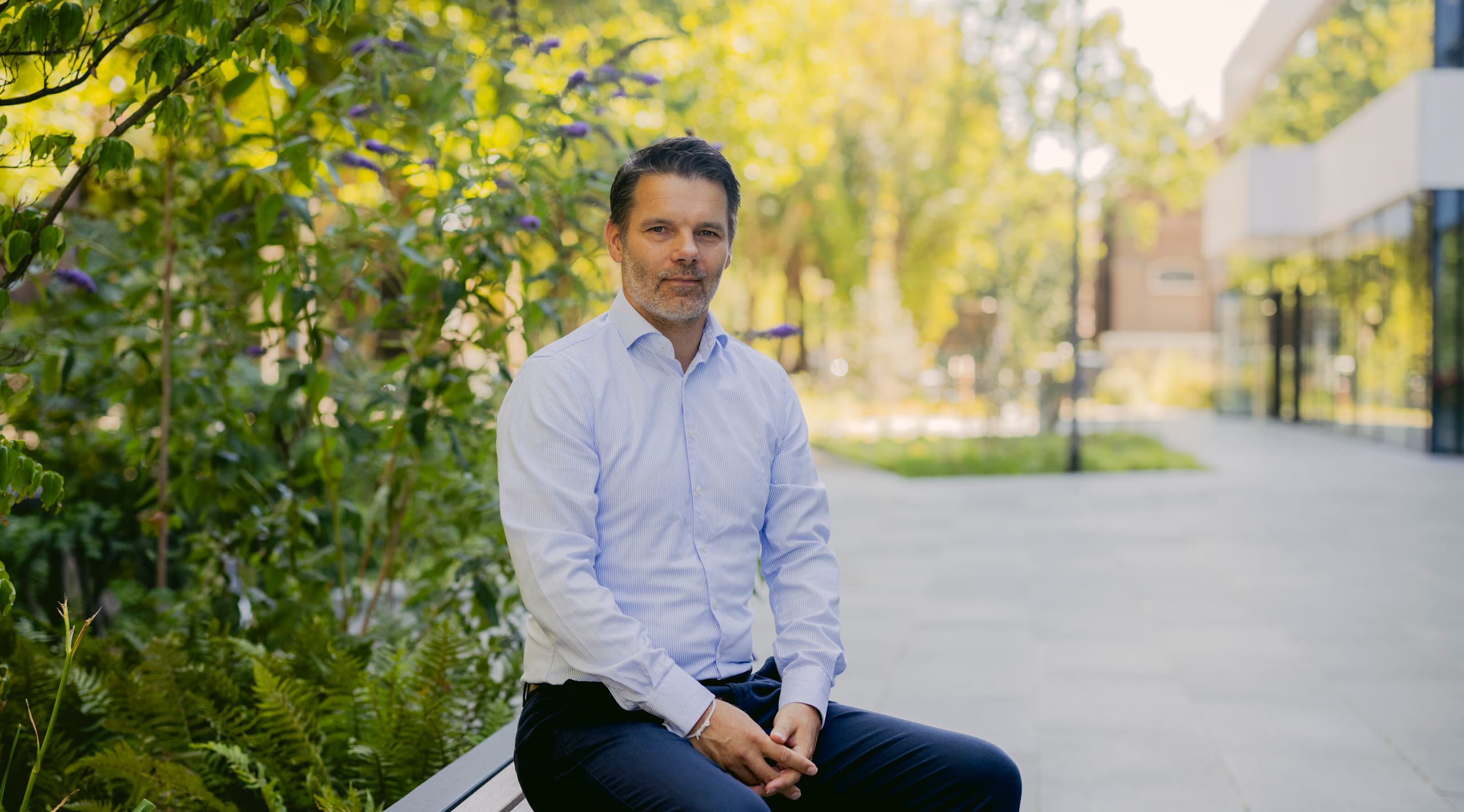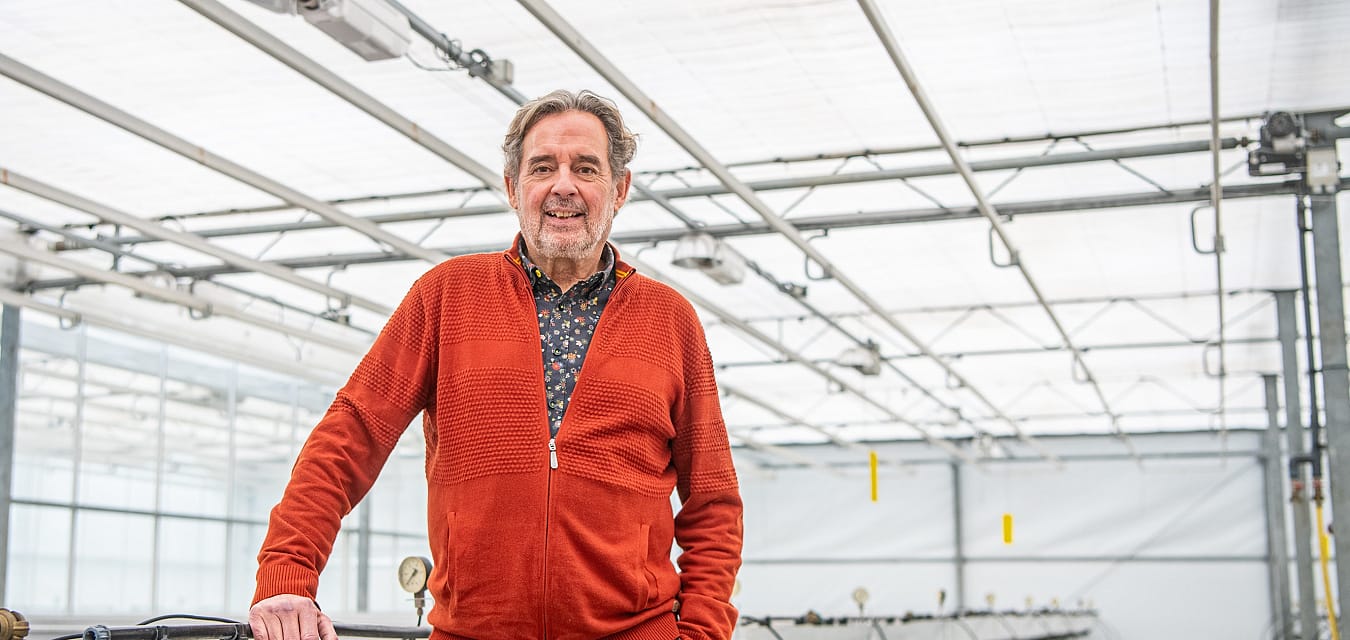
Stefan van der Heijden - Interim Consultant Agribusiness, Nomilk2day Interim
Stefan van der Heijden once tasted entrepreneurship when he was in between jobs. However, throughout his career, he always worked as an employee. It wasn't until he retired that he officially became an interim consultant, but even that was actually an unexpected choice.
Stefan van der Heijden - Interim Consultant Agribusiness
After a long and successful career in the seed business of food and feed crops and biotechnology, Stefan retired in 2021. Soon after, Clemens Stolk from Innova Connect approached him. He asked if Stefan was interested in setting up the business together and growing the company. Not only did Innova Connect grow, but also Stefan's portfolio, as he took on one temporary assignment after another.
You became an interim consultant after your retirement. What is your focus?
"My focus is on the sustainability of plant production: research programs, improvement projects, supporting startups, education, and advice. This ranges from evaluating which (genetic) techniques work best to connecting products with the market. I just really enjoy sowing seeds, helping companies move forward!"
Interim consultants sometimes feel a certain pressure to perform quickly. Do you experience that too?
"Well, I call that internal drive. I want to deliver results, I am constantly focused on that. The pressure I feel is directed towards achieving something constructive."
In your opinion, what are the key qualities an interim consultant should have?
"Good listening skills, building trust, and quick adaptability. It's about getting the necessary information to find the right solution. Knowing the content well is the foundation to build on and take action from there. During the assignment, it is important to communicate honestly and effectively. Ultimately, it is up to me to combine many different aspects to make an informed decision. So, I am constantly working on it. Even when driving to and from the location or while cycling. Interim work is not a 9 to 5 job."
Do you get good insights while driving or cycling?
"Often. During the journey, all sorts of good ideas come to mind. By the time I arrive at the office, I have already spent two hours thinking and I am full of ideas. So, those hours are not wasted."
What is your strength?
"My strength lies in the breadth from which I can engage in discussions with people. Thanks to my diverse experience, I quickly understand their specialization, see connections, and place it in a business context. I ask about their biggest challenges. For them, these challenges often carry a negative connotation; I try to turn that into something positive. Just that alone can solve a number of things. I have been working in agriculture for quite a while, and I know how passionate people are. They work out of passion, but sometimes forget that they are part of a larger picture. I can help with that."
How would you describe yourself as a leader?
"I think I am quite business-oriented, to the point, but with an eye for the person behind the employee. I make sure that arguments are exchanged, but I avoid endless discussions. I am very focused on content, and because I am always well-informed, I dare to make decisions and then put the team into action mode."
Who or what inspires you?
"What I have found very helpful is the 1990s book on the learning organization by Peter Senge. How can an organization increase its capacity by adapting and thriving in a continuously changing environment? Learning from each other, openness, and transparency are a few elements. When I enter somewhere, I check whether the company is already working as a learning organization or if it still needs to be implemented."
What do you see as the most important reason for companies to hire an interim manager?
"I think it is good for many companies to occasionally open up to different perspectives. It never hurts to let someone else take a look at how things are going. Not only certain processes, but also their own functioning. Especially in agribusiness where it is about cost, efficiency, and costly and long-term research, this can lead to interesting conclusions. An externally experienced expert operates in many disciplines and quickly sees where improvements can be made."
You have been semi-retired for a while. How long will you continue working?
"As long as I can bring added value. Both in terms of physical energy and content. With short-term assignments, I step out of my comfort zone every time, I have to quickly understand the subject matter. Once it becomes burdensome and draining, then there comes a point where it is wise to stop, but that is not the case yet."
Are you an efficient interim manager or is your organization looking for an interim professional who delves into business issues? Contact our interim team.
Photo: Ringfoto De Boer: Rutger Bronts
[Published: January 2024]