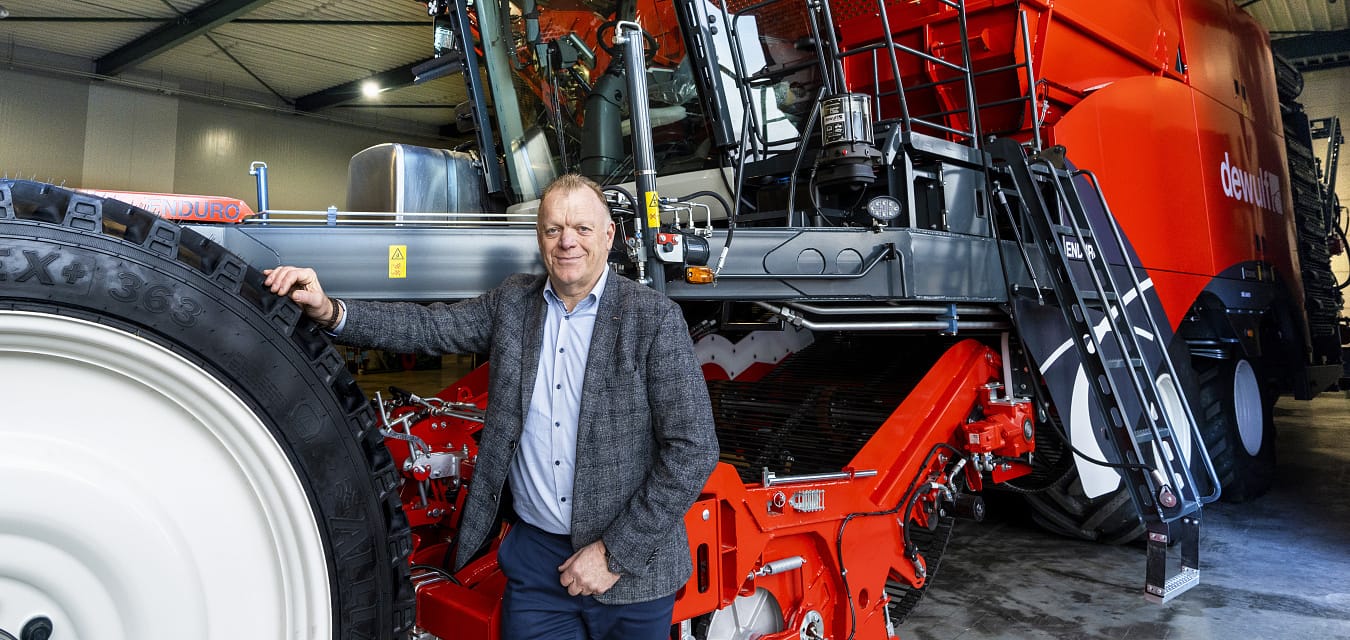
Hans Quint - Director, Abemec
From 10 branches to 23, from 100 to 350 employees, and from 23 million to 130 million euros in turnover. Agricultural machinery company Abemec is growing on all fronts. 'I believe that we are more than just a machine seller. I want to show that we, as the agricultural sector, can do more.'
Hans Quint - Director
End of the year, at one of Abemec's branches in the Flevopolder. Mechanics in the workshop, director Hans Quint in a meeting, and the salesmen are out. 'It is the busiest sales period of the year for agricultural machinery. 40 to 50 percent of the annual turnover happens during this time. And we are also busy with the brand-new building in Biddinghuizen, which will open in the summer of 2023,' explains Abemec director Hans Quint.
You have not been idle in recent years.
'That's right. Since its founding in 1947, Abemec has grown steadily, especially in the southern Netherlands. From the 2000s, there was more focus on the northern and central Netherlands through acquisitions. In terms of customer groups, we focus on livestock farming, arable farming, contracting, fruit growing, and horticulture. This offers two major advantages in terms of continuity. If one sector is struggling, another may be growing. This way, we can balance the ups and downs. The second advantage is that we operate in different arable farming areas. Sometimes the harvest is poor in Zeeland, but good in the polder, for example. This helps us remain financially healthy.'
Abemec has acquired quite a few companies in recent years. What ambitions are behind this?
'We are one of the largest agricultural machinery companies, but we don't necessarily need to be number one. What we want is to be a strong player with national coverage. There are three reasons for this; it makes Abemec an attractive employer with more advancement opportunities, for customers, we are a better knowledge center with specialties, and for suppliers, we are a stable partner and a better purchasing partner.'
What is currently happening in agricultural machinery?
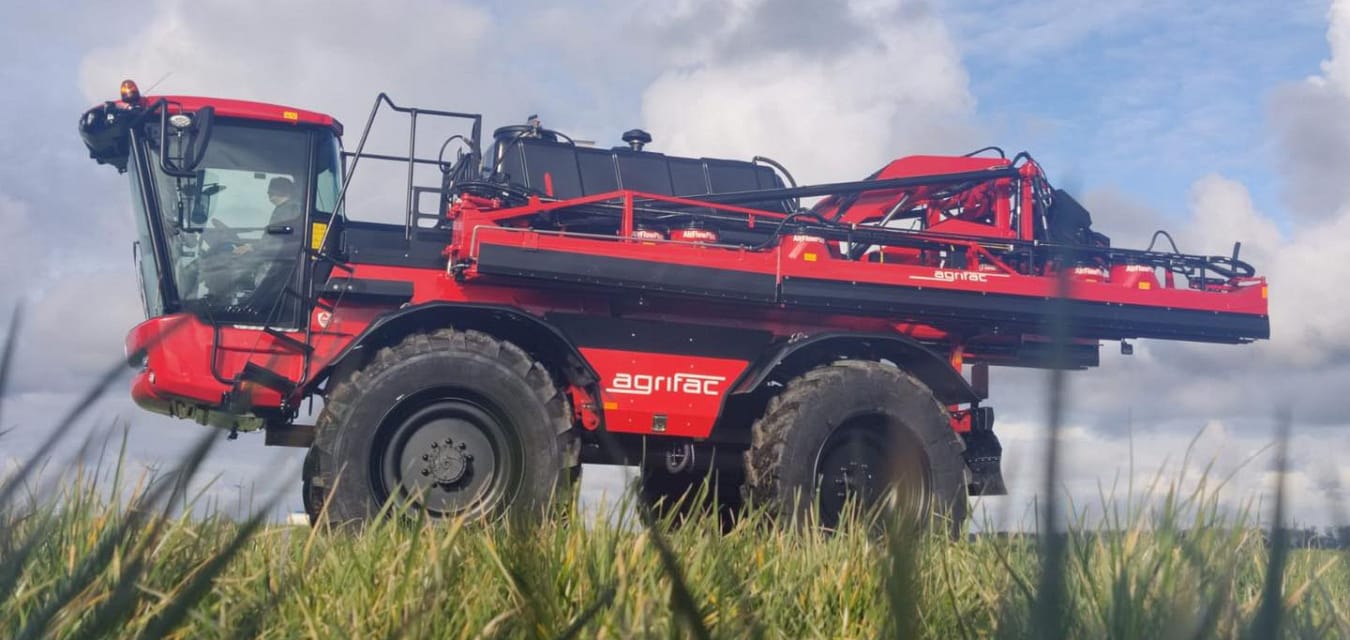
'To become a better farmer, implements are very important. Especially because they are generating better data and are increasingly equipped with camera technologies and sensors. Currently, there is ongoing development in spot spraying, weed control with hoeing techniques, and robots. The advancements are happening so quickly. It's very exciting to be closely involved! Our implement carrier AbeTrac is a great example of our innovation capacity. Major progress has also been made in fruit growing. For example, by spraying only where leaves are present, 40 percent can be saved. With simple smart adjustments, significant sustainability advantages can be achieved.'
Aside from selling top brands, you are also introducing innovations to the market. What else is coming?
'There is currently a significant project underway in the field of electrification: the construction of a 200 hp electric tractor for the construction, road, and water sectors. Such a vehicle does not exist yet, and suppliers are hesitant to start. Therefore, we have partnered with someone to develop this because a zero-emission vehicle is also interesting for the future of agricultural entrepreneurs. Many farmers have solar energy: With the disappearance of the net metering scheme, it is worthwhile to invest in batteries for charging electric machines. This way, we contribute to stimulating innovation.'
Isn't such a project uncertain and therefore risky?
‘We invest in new technologies and innovations because we want to do more than just our daily business. We want to make a difference for society. It's important for the sector to share knowledge, which is why we started an academy for employees and customers. We are the first to do this. We also have a connection with projects from WUR and the Fruit Tech Campus. We want the same for arable farming in Flevoland. Why? I believe that we are more than just machine sellers. It's about a strong agricultural sector and safe and sustainable food production. I want to show citizens and politicians that as an agricultural sector, we can do more.’
Nice mission. What does that require from the employees?
‘You need to enjoy working with innovation. The focus on innovation requires people who can think ahead. People who talk to the customer in a future-oriented way. Where does he want to take his company? What challenges will he face? What crops will he grow? And what machines and processes are needed for that?
Skills such as good listening, asking questions, analyzing, and providing thorough advice; you need to have that in you. I always say; we sell based on knowledge and based on a customer's need, not based on inventory. We offer customized mechanization and don't fill the warehouse with machines. We only purchase after the sale is made. That sets us apart.’
Abemec is part of the German BayWa group with over 3,000 branches in more than 50 countries. How visible are you?
‘BayWa is a cooperative with headquarters in Munich and specializes in trade, logistics, and services for agriculture, energy, and building materials. They have around 300 mechanization companies in South Africa, Canada, Austria, Germany, and the Netherlands. The largest Fendt customer worldwide. BayWa has designated us as the innovator of the group. The reason? The Netherlands can often switch gears a bit faster than Germany. We can accelerate the market here with robotics, data management, energy transition, electrification, and hydrogen. The connection also offers employees opportunities for advancement within the group.’
And the work atmosphere, how is it?
‘No surprises and a deal is a deal. There is a strong administrative discipline because what we do must be correct. In that sense, we are quite a predictable organization. If we agree on a certain course, that is the course. This applies to suppliers and customers. We want to be a reliable party that exudes continuity. Furthermore, we encourage an entrepreneurial spirit among our employees and they have quite a bit of freedom. Everyone helps each other. We want everyone to be proud of the company.’
Photo: Gerard Burgers