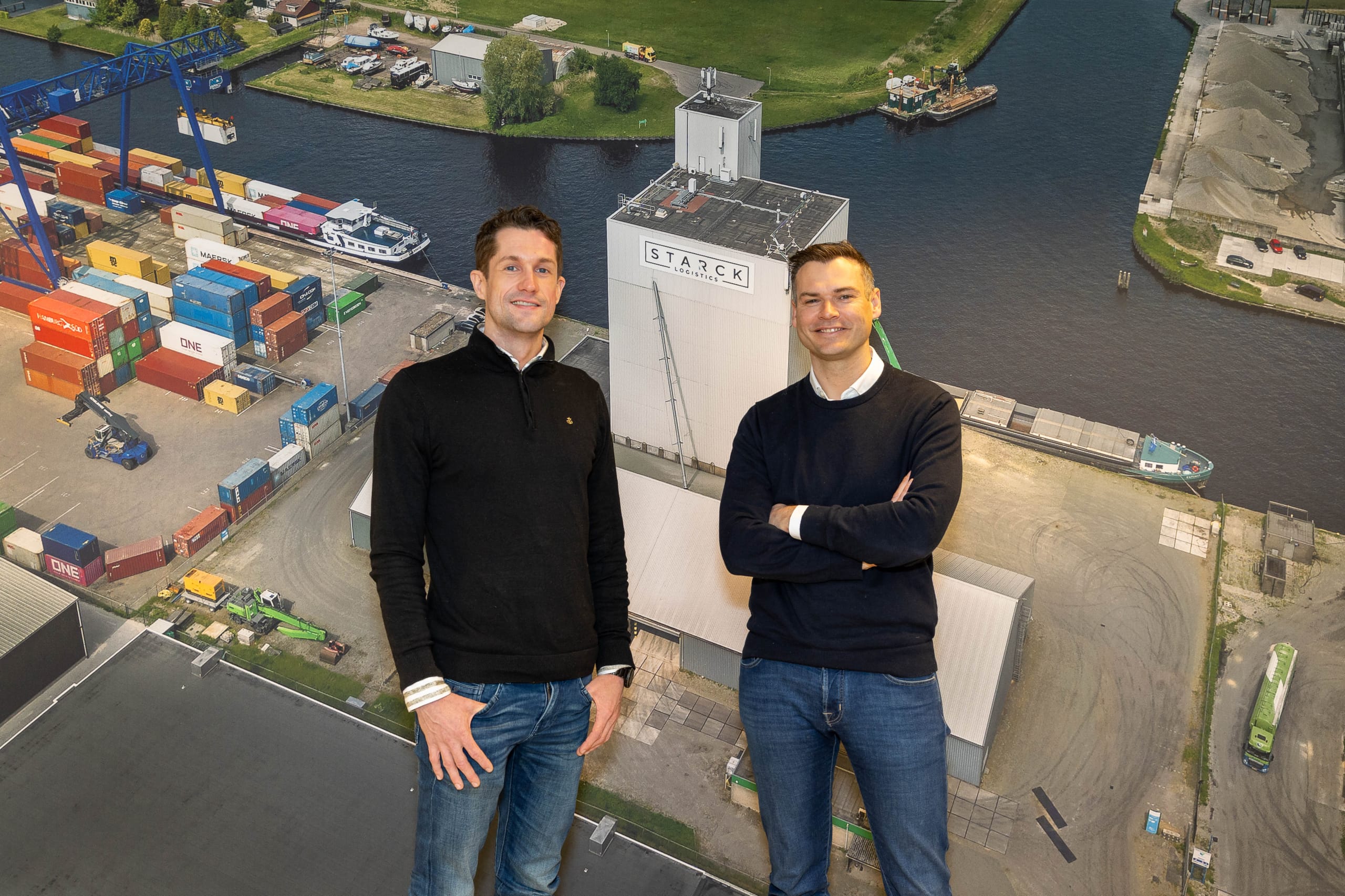
Vincent started a trading and distribution company in agricultural raw materials five years ago together with his right-hand man Elwin. With Vincent focusing on trading and Elwin on operations, they rapidly expanded Starck International. The secret? A super-strong logistics base with their own storage and transshipment locations. And a team of enthusiastic, driven people. They ensure that byproducts from various industries are further processed into value, especially in the European animal feed industry.
The view from the 11th floor of the office tower in Utrecht where Starck International is headquartered is unique. You can see the football field of Galgenwaard, the stadium of FC Utrecht. It is also exemplary of the approach of the relatively young trading and distribution company of agricultural raw materials. "Administration, finance, logistics & trade: think of it as a soccer team. Defense, midfield, and forward: it's all important," says Vincent Allertz, director and founder of Starck International. "No one is put on a pedestal more than the other. We all stand on the same pedestal and work together to expand the business. It's great for everyone to see that we are growing significantly as a result."
Describe 'that business' briefly, what does Starck International do?
"At the core, we are a logistics platform through which we transport byproducts from food producers to mainly animal feed manufacturers in Western Europe. Producers include sugar producers like Nordzucker or Suikerunie. Or Dossche Mills that supplies grain products to bakeries. But also a bioethanol plant or a starch factory. All these processes generate byproducts that the animal feed industry uses as raw materials. With our logistics framework and through the many contacts with producers and animal feed factories, we ensure that all these byproducts are traded and transported efficiently. We relieve both the producer and the animal feed factory. We have grown so much that we can quickly and flexibly respond to any demand. And easily integrate any byproduct into our logistics platform. So, we actually handle physical shipments, not just trading on screens."
How big is big? You started in 2021, but now there are over 30 people working at Starck International.
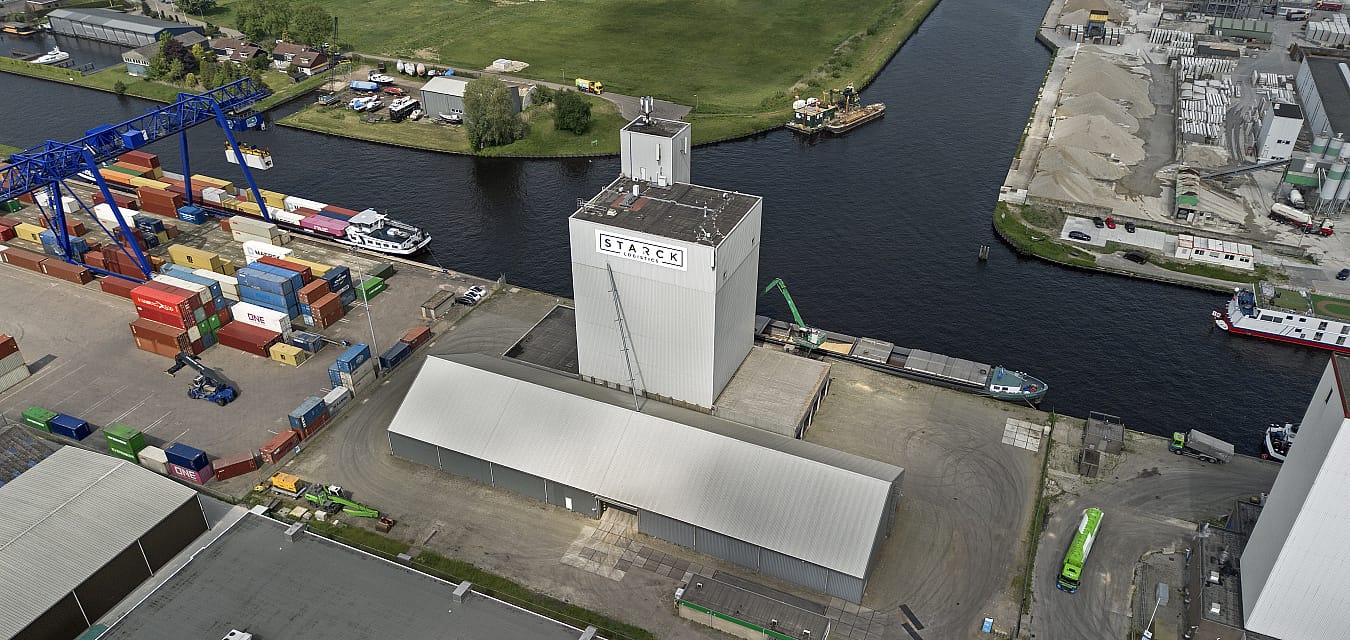
"We handle an average of 600 shipments per week. These involve a wide variety of byproducts. This differentiation is crucial because it allows us to better meet the diverse demands of animal feed manufacturers. But perhaps more importantly, we have our storage and transshipment capacity to ensure the smooth transportation of all these byproducts. In Meppel, we have a 1-hectare transshipment location, in Sas van Gent (part of North Sea Port) 2.5 hectares. Additionally, we rent transshipment locations in 6 other places in Germany, Poland, and Latvia. We do everything in-house, allowing us to act quickly and flexibly. And store byproducts temporarily when needed."
Those are significant investments; do you finance all of that yourselves?
"From the start, we have had a major player backing us, the Italian Borsari group. They own half of the shares of Starck International. This way, we share market risks, logistics risks, and product risks together. These are all risks we are comfortable with because they are our core business. In Southern Europe, they are 'by far' the largest in trading and transporting raw materials and byproducts. Just like us, they have their storage and transshipment capacity at 16 locations, all larger than ours. We have almost daily contact with them, discussing market trends. But they also provide strategic input and assist with investments. We only invest in our core business; stick to what you know best!"
You radiate constantly when you talk about work. What makes it so beautiful?
"Trade is super dynamic; no day is the same. The foundation is logistics and there is always something going on. And within that dynamism, you work with people with whom you build a relationship of trust. We don't do this in a static way, trapped in a corporate structure. We also don't use job titles. We operate as one team knowing that we all need each other to be and remain quick, flexible, and agile."
"In our case, logistics is always in the lead at the front."
What is the strength of Starck International? How do you distinguish yourselves from other market players?
Vincent leans back for a moment, organizing his thoughts in his quick and active mind, reflected in his dark eyes. "Internally, we have very short lines of communication and we keep political games out. We are open: you can truly say and express anything with respect for others. And we are direct: straight is straight, crooked is crooked. I call it a no bullshit policy. We never play on a personal level; it's about the business. You can make mistakes, that's not a problem. By facing them, we improve ourselves more and more. It's about the business, but we do it together. That's why it feels like a family business: we are there for each other! Externally, we are very approachable and our people can make quick decisions on their own. And we have our own locations to make the transportation of all those different residual streams as efficient as possible. We have a wide product portfolio and if needed, we provide financing for logistics."
You say everyone is equally important, but I notice you often talk about logistics. Why is that?
"Because in our case, logistics is always in the lead at the front. Our core is our logistics platform, as I mentioned. It's about a lot, a whole lot of products that need to go from A to B. We currently have six people working on logistics, but we want to expand that. It forms the heart of our company, figuring out how to transport full loads as efficiently as possible, usually by truck, after they arrive by ship."
What are the most important lessons in the five years of your existence?
"Having good people around you. Here in the office and at our own locations. Without them, you are nothing! Second: working on long-term relationships based on trust. This is possible because we always keep our word, even if it costs money at times. We aim for the long term, not short-term profits. In soccer, it's about the game, but ultimately of course it's about the result. It's the same for us: we all enjoy the game, but in the end, money must be earned for a good, growing, and healthy company."